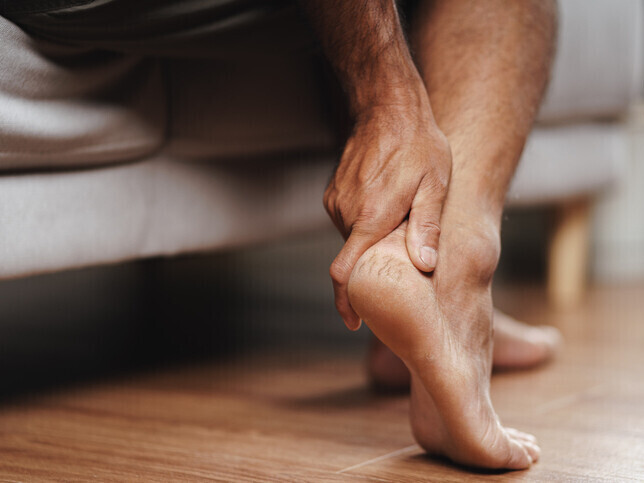
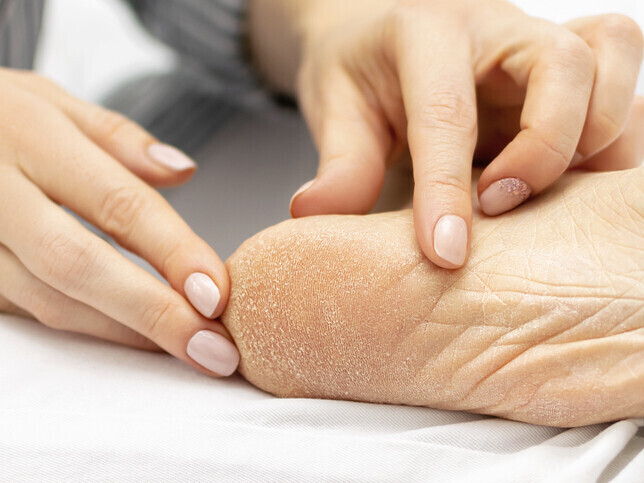
Signs of Cracked Heels. You may notice:
- Dry, rough skin around the heel
- Thickened hard skin
- White or flaky skin
- Small cracks in the heel
- Deeper fissures
- Pain when standing or walking
- Skin catching on socks
- Bleeding from deeper cracks
Cracked heels can range from mild superficial dryness to deeper and more painful fissures.
When Should Cracked Heels Be Treated? Mildly dry skin may respond well to regular moisturising and appropriate home care. However, professional assessment may be helpful if:
- The skin has become very thick
- Cracks are painful
- Fissures are deep
- The skin is bleeding
- Callus keeps returning
- Walking is uncomfortable
- Home care hasn't improved the problem
- You have diabetes or another condition that affects your feet
Early treatment can help prevent small cracks from becoming deeper and more uncomfortable.
Professional Cracked Heel Treatment. At Shire Foot Clinic, treatment focuses on reducing the thickened skin and helping the fissured area to heal. Treatment may include:
- Mechanical Reduction of Callus
- Thickened callus around the heel is carefully reduced using professional podiatry techniques, including scalpel debridement where appropriate.
Fissure Treatment
Where a fissure is present, the hard skin around the opening of the crack can be carefully reduced. Removing the hardened edges can help allow the skin to come together and heal more effectively.
Personalised Home-Care Advice
You'll be advised about appropriate moisturising and ongoing foot care based on the condition of your skin.
Once thickened skin and fissures have been professionally treated, maintaining the skin's condition at home is an important part of ongoing management. We may recommend a urea-based foot cream, with the concentration selected according to the condition of your skin.
Urea helps improve skin hydration and can also help soften areas of thickened skin.
Your home-care recommendations will be tailored to your individual needs.
Professional podiatry treatment can make a significant difference to thickened and fissured heels, but maintaining healthy skin between appointments is equally important. After your treatment, you'll be given advice about caring for your feet at home and maintaining the improvement achieved in the clinic.
Regular professional treatment alongside consistent home care can help achieve and maintain the best results.
Cracked heels can be a recurring problem. Even after the thickened skin has been reduced, the underlying tendency for the skin to become dry and callused may remain. Factors such as footwear, pressure, skin type and everyday activity can all contribute.
This is why ongoing moisturising and appropriate home care are important.
For some people, periodic professional podiatry treatment may also be helpful in keeping the skin under control.
Open-backed shoes and footwear that allows the heel to spread can sometimes contribute to the development of cracked heels. Footwear that provides appropriate support and fits comfortably can help reduce unnecessary pressure on the heel.
We can discuss your footwear as part of your assessment where appropriate.
Cracked heels require particular consideration if you have diabetes. A deep fissure can create a break in the skin and may provide an opportunity for infection to develop, particularly where sensation or circulation is reduced.
If you have diabetes and develop deep cracks, bleeding, a wound, redness, swelling or signs of infection, professional or medical assessment should be sought promptly. Learn More About Diabetic Foot Care
Your individual level of foot-health risk will be considered before treatment.
Don't Ignore Painful Cracks. Professional assessment is recommended if your cracked heels:
- Are painful
- Are deep
- Are bleeding
- Keep returning
- Have become difficult to manage yourself
- Are accompanied by redness or swelling
- Are showing signs of infection
- Are affecting your ability to walk comfortably
If you have diabetes or reduced sensation, seek professional advice rather than attempting to cut or aggressively remove thickened skin yourself.
Avoid Cutting Cracked Heels Yourself. It can be tempting to use blades, scissors or other sharp tools to remove thickened skin. We do not recommend doing this yourself.
Professional podiatry treatment allows thickened skin to be reduced appropriately while considering the condition of your feet and any underlying health factors.
This is particularly important if you have diabetes, reduced sensation or circulation problems.